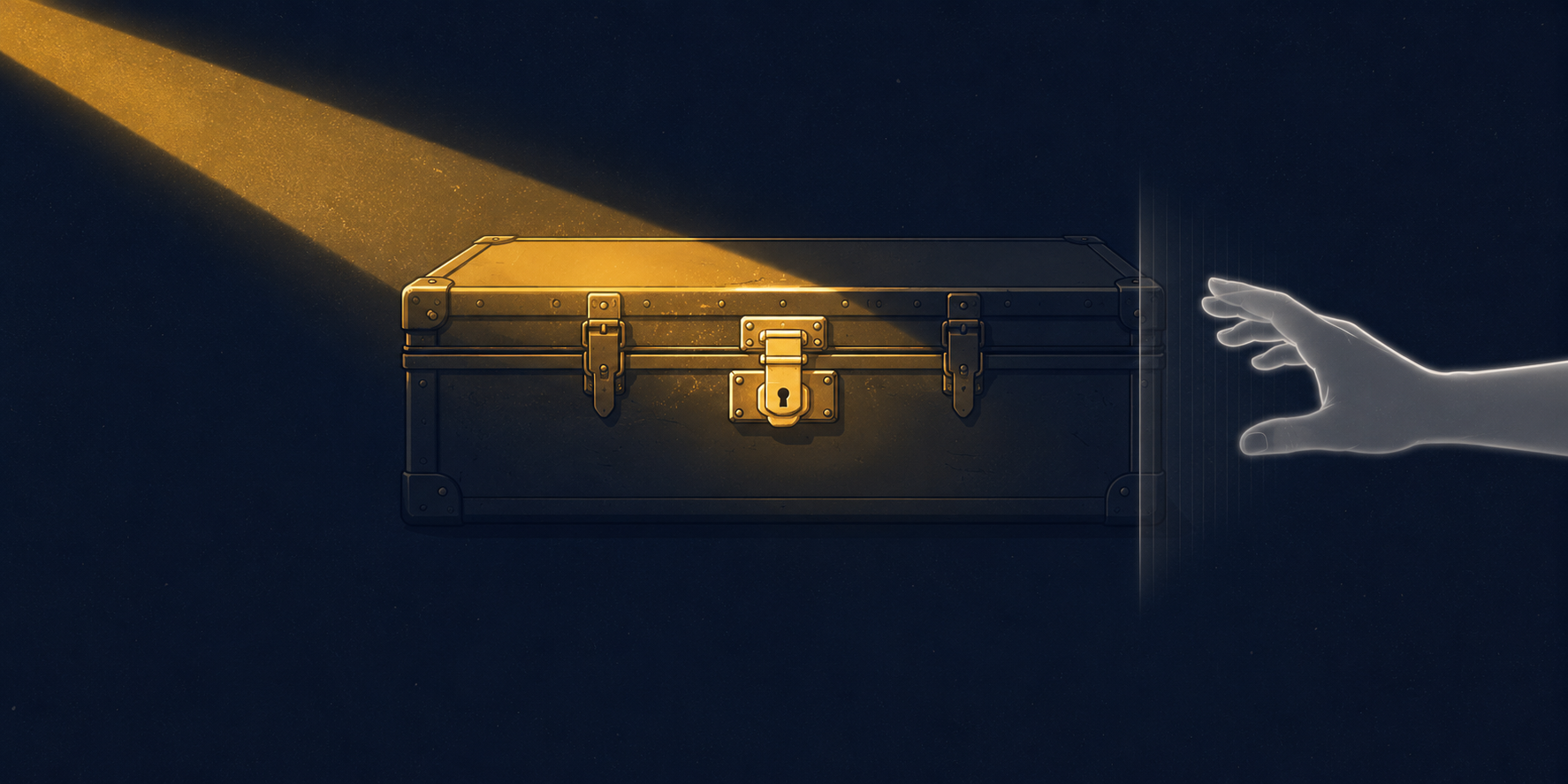


My son was still learning to hold a spoon the night I read that the kingpin walked free.
Not the news. The half-second after—phone face-down, looking at him, doing the math on which year he sits his first real exam.
Sanjeev Mukhiya. Bihar Police’s name for the 2024 NEET leak. A year on the run. Arrested.
This week—while a hunger striker was still hooked to a drip in a private hospital and Parliament was still arguing about crowd counts—the CBI cleared him. No evidence, they said. Forty-five other people got chargesheeted in the same case.
Forty-five. Not zero. Just not him.
This isn’t the first time the story ends here.
2021: a man who called himself “Dr PK” ran a solver ring—thirty, forty lakh rupees to send someone else into the exam hall wearing your child’s admit card. Bounty on his head too. Arrested too. Then nothing. No conviction headline, no follow-up, no ending. The silence is the ending.
Three cycles now—2021, 2024, and the one that put students on the street this July, a season after a Chief Justice called them cockroaches. Same shape every time. The people who stay caught are always the small ones: an eighteen-year-old candidate, a school vice-principal, a cousin who drove the delivery. The men the FIRs call kingpins keep finding a door marked insufficient evidence.
I’m not going to smooth it: the families who pay for a leaked paper aren’t innocent either. Same references. Same money. Same shortcut everyone insists they’d never take—until the shortcut is standing at their own door with a price tag. Convict every desperate parent in Bihar tomorrow and the leak economy survives Tuesday, because demand was never the fragile part. Supply was never actually threatened. It just changes which trunk it travels in.
So who benefits if nobody at the top ever falls? A coaching industry that sells certainty against a system everyone already assumes is rigged—the more broken the exam looks, the more a “guaranteed” seat is worth. A paper trail—literal paper, in a literal trunk, moved by hands nobody wants named—that stays unaudited because auditing it means admitting how many people touch a sealed exam before it reaches a desk. And a state that gets to look tough on camera—CBI custody, special court, ten-day remand—without once answering why the same leak, in the same shape, keeps arriving on schedule. No conspiracy required. Just everyone finding it easier to arrest the visible edge of a problem than rebuild the part nobody can see.
How the Decisions Keep Looking Identical
What’s sharp about “insufficient evidence” as a ruling is that it’s technically unchallengeable and structurally invisible. You can’t argue with it—it’s not a verdict, it’s an absence. A court can overturn a conviction. A higher bench can challenge the logic of a judgment. But “insufficient evidence” closes every door at once because it says: we looked, we found nothing, and we can’t explain why because there is nothing to explain. The language is perfect for protecting someone because it requires no conspiracy, no cover-up, no smoking gun. Just the ordinary friction of a system where evidence gets lost, witnesses become uncertain, and the investigating officer’s memory of the interrogation session gets fuzzy after a year of bureaucratic handoffs.
In 2021, Dr PK walked because of “insufficient evidence”—or more accurately, he walked into silence, which is the same thing. In 2024, Sanjeev Mukhiya walks this week, also “insufficient evidence.” The language is identical. The timing is different—one case went cold gradually, one was cleared after a year of CBI custody—but the mechanism is the same. No kingpin, no matter how credibly named or widely hunted, stays convicted in a system where the evidence is whatever the last person to handle the file decides to keep.
The Answer Exists. The State Chose Not to Use It.
Here’s where it gets sharp: the government knows exactly what needs to happen. They know because someone already told them.
On July 25, 2026—the same day Pradhan resigned—the Cockroach Janta Party met Union Ministers J.P. Nadda and Jitendra Singh at the Constitution Club to present their demands. Not slogans. Five concrete structural asks:
- ₹10,000 mandatory compensation for every student affected by a leak
- Subsidized trains for test-takers traveling to exam centers
- 72-hour backup exam dates (no more months-long delays)
- Rejection of digital evaluation—demand for physical answer sheet assessment
- Independent audits of all exam systems and merit-based outsourcing of exam contracts
The government’s response to the Five-Point Charter: “We will think deeply about your demands and request four weeks for evaluation.” The CJP accepted. The protests ended. The streets cleared.
But that’s not where the answer stops existing. A day earlier, the government was handed something sharper. The CBI’s investigation into the 2024 leak had already identified the exact vulnerability: a Pune-based lecturer, Manisha Sanjay Havaldar, was distributing “guess papers” through encrypted platforms that matched the actual exam by 100%. This wasn’t a security guard nodding someone through. This was the printing and typesetting phase compromised—meaning the problem originates with the NTA’s reliance on poorly-vetted third-party vendors.
The structural fix is known: Convert the NTA from a registered society to a statutory body. This single change would mandate Comptroller and Auditor General (CAG) audits—the same ruthless oversight that scrutinizes every other government agency. It would require transparent vendor selection instead of opaque contracts. It would make the NTA answerable to Parliament instead of just to the Ministry of Education.
This petition exists. The United Doctors Front filed it at the Supreme Court. They’re asking for exactly what the CJP is asking for: statutory oversight, CAG audits, restrictions on outsourcing core functions.
The government’s response: silence.
Instead, the Prime Minister released a midnight video acknowledging the crisis as “damage to the credibility of recruitment systems” and pledging that “no pardon will be given to those behind the leaks.” New fast-track courts. Mandatory 5-10 year prison sentences for paper leak organizers. A special task force to investigate. All of it pointing in one direction: we will catch and punish the people at the bottom who get caught.
None of it pointing toward the answer the government already knows exists.
The Answer Is Not Blowing in the Wind. It’s Being Held.
The NTA collects fees from over 80 lakh students annually. Its vendor selection process, its infrastructure spending, its financial mechanics—all of it remains completely opaque to independent constitutional oversight. The government has deliberately avoided submitting it to CAG audits, a step that would take literally one approval from the Ministry.
Why? Because converting the NTA to a statutory body would require admitting that the current system is broken by design, not by accident. It would mean naming which officials approved which vendors. It would mean explaining why printing contracts went to firms with no track record. It would mean opening the ledgers to public scrutiny instead of keeping them in the filing cabinet where someone can clear a kingpin by saying there’s insufficient evidence.
My son has sixteen years before any of this reaches him. Long enough to pass three more exam cycles. Long enough for three more “insufficient evidence” rulings if the pattern holds. Long enough that I should be able to see a government that chose to fix the system instead of just punish the people caught in it.
This isn’t a party’s failure. Swap the ruling party and the trunk still travels the same road, guarded the same way, opened by the same kind of hands. What failed is a system that has decided, deliberately, that consequence stops exactly at the altitude of people who can’t afford a lawyer good enough to make evidence disappear. The kingpins walk because the state benefits from leaks continuing—they keep the demand for coaching industry certainty high, they keep the public distracted chasing criminals instead of questioning the architecture, and they keep the executive’s hands on the NTA’s opaque machinery without parliamentary scrutiny.
That’s what the protesters already know, even the ones too tired to put it in a slogan. They’re not out there because a judge used an ugly word. They’re out there because they’ve watched this exact ending—twice—and they already know the government has written the third act.
So here’s the only question worth asking, and the government has already answered it by refusing to:
If the answer exists and is documented and is sitting at the Supreme Court waiting for a response—why does the state refuse to use it?
Most people see noise. I see structure.
New post, once a week. No noise, no drip campaign.


Leave a Reply