


You’ve played this game. A line of people, a whispered sentence, passed ear to ear. By the time it reaches the last person, it’s unrecognizable. Everyone laughs. Nobody’s surprised.
What’s less obvious is why it happens. Not because people are careless. Because each person only has access to what they heard — not what was meant, not the reasoning behind it, not the version before the version before theirs. They pass along the surface and lose the structure underneath it.
That’s not a game anymore. That’s most people’s relationship with AI right now.
The Question Nobody Asked Correctly
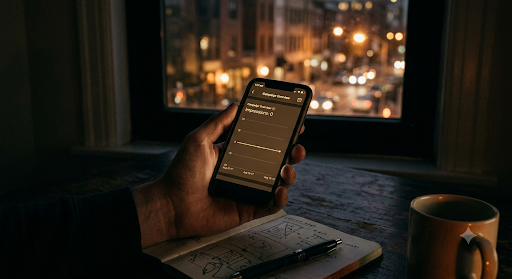
Someone asked to see my chat last week. Not the output — the prompt. Like the words I typed were the whole trick.
I get why. The email was good. The presentation was better than good. People assumed if they had the exact words I used, they’d get the exact result I got.
They wouldn’t.
What they can’t see is everything sitting behind that one prompt — the skills, the agents, the memory I’ve built and maintained over months, quietly, in the background. The prompt is the tip. The system underneath it is the actual work, and it’s invisible unless you know to look for it.
Hand someone my prompt without that backend and they’ll get something that looks like what I made. It won’t hold up the same way. It’s the whisper two people down the line — recognizable, degraded, missing the thing that made the original one work.

Is This Mine, or Is This the Tool’s
For a while, even I wasn’t sure where the line was. I’d finish something — a checklist, a report, an email — and catch myself wondering: is this mine, or is this the tool’s?
It’s a fair question. AI-generated work is genuinely good now. Good enough that the line between “I made this” and “this got made” starts to blur if you’re not paying attention. I wrote about this blur before, from the client side — how AI-generated presentations can invisibly raise expectations you can’t walk back. This is the same blur, just facing inward instead of outward.
Here’s where I’ve landed: the output isn’t the skill. The skill is what makes the output better than it would’ve been in anyone else’s hands, using the same tool.
Two people can type the same prompt into the same tool and get different results, because one of them spent months building the invisible thing that makes the visible thing work. That difference doesn’t show up in the chat log. It shows up in the result — and only if you know to look for it, which most people don’t.
Why the Backend Is the Actual Skill
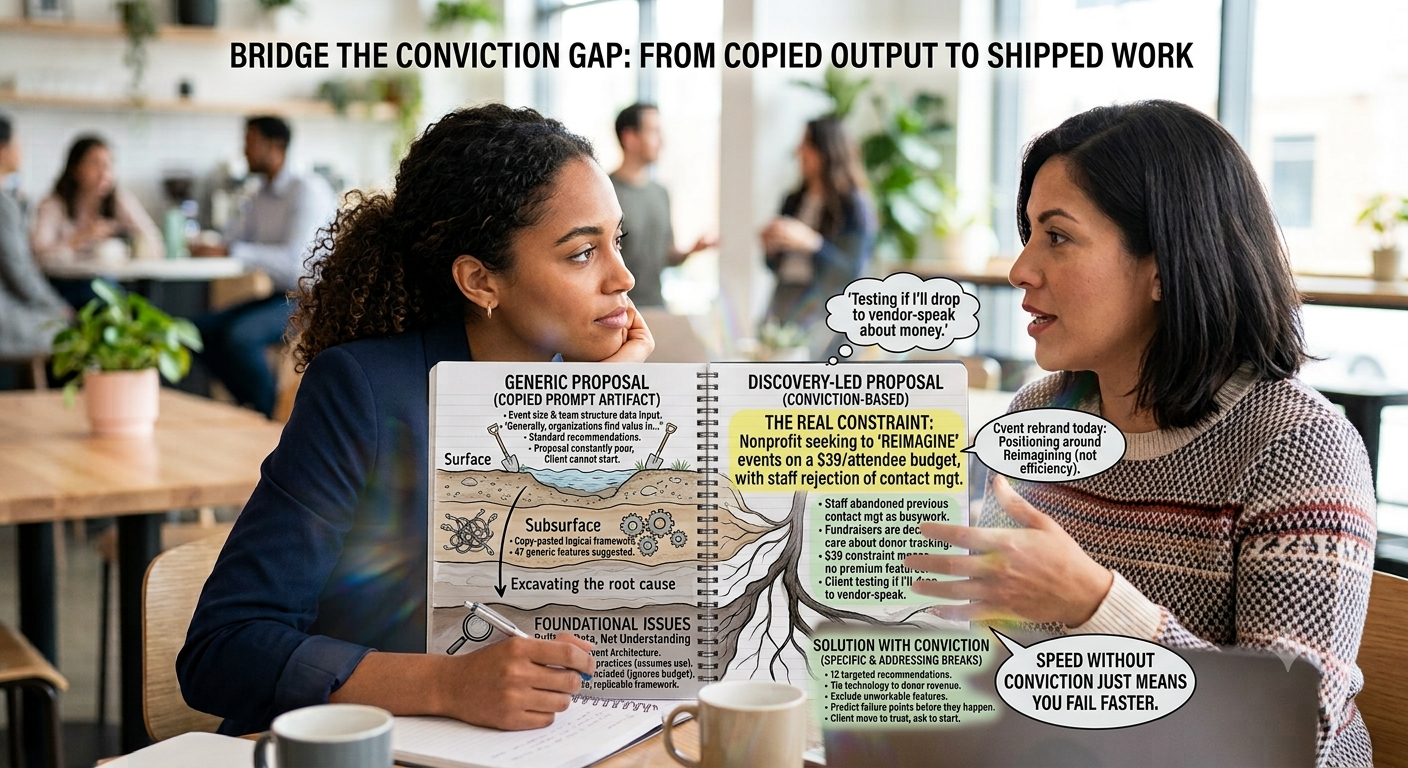
I’ve spent months building skills, agents, and memory into the tools I use — not because I’m collecting features, but because that architecture is what makes a prompt useful instead of generic. It’s slow, unglamorous, and nobody sees it. What people see is the finished email. What they ask for is the sentence that made it. Neither gets them what they actually want. I hit the same wall building something else entirely — a comic book, of all things, where the backend held the words together long before it could hold a face.
This isn’t unique to AI. It’s the same mistake as judging a system by its most visible moment instead of the structure that produced it — the same mechanism I wrote about in the litre I pay for is not the litre they breathe: the surface reading always misses the thing that actually explains what you’re looking at.
Chase the sentence and you get a copy. Chase the system and you get the skill.
The Flicker That Doesn’t Go Away
I know that. I still catch the flicker of doubt every time someone asks for the prompt instead of asking how I built the system. Confidence and doubt aren’t opposites — they run in parallel more often than anyone admits.
Maybe that flicker doesn’t go away. Maybe that’s just what it feels like to hold a skill nobody can fully see, in a moment where everyone’s still learning to look for the right thing.
The game ends when the last person says the sentence out loud, and everyone laughs at how far it drifted from the original. Nobody blames the whisperers. Nobody asks to see the words each of them used.
Maybe that’s the tell. We already know the prompt was never the point. We just haven’t caught up to that with AI yet.

Leave a Reply